
World News, Show Bussiness, Science - Technology, health, Crypto Currency - Viadiplomacy.org
  • Hollywood
  • Elon Musk
  • Astronomy
  • Science
  • Technology
No Result
View All Result
Viadiplomacy
  • Hollywood
  • Elon Musk
  • Astronomy
  • Science
  • Technology
No Result
View All Result
VIADIPLOMACY
No Result
View All Result

Hubble Captures Colorful Celestial Cloudscape in the Orion Nebula

4 years ago
in Astronomy
30 0
0
Hubble Captures Colorful Celestial Cloudscape in the Orion Nebula

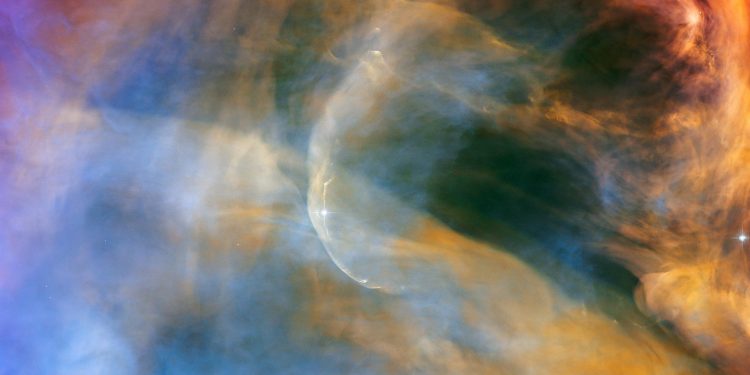
Hubble Space Telescope captures the colorful region surrounding the Herbig-Haro object HH 505. Credit: ESA/Hubble & NASA, J. Bally, Acknowledgment: M. H. Özsaraç

12
SHARES
Share on FacebookShare on Twitter

This vibrant celestial cloudscape from the NASA/ESA Hubble Space Telescope captures the colorful region surrounding the Herbig-Haro object HH 505. Luminous regions surrounding newborn stars, Herbig-Haro objects are formed when stellar winds or jets of gas spewing from these newborn stars form shockwaves colliding with nearby gas and dust at high speeds. In the case of HH 505, these outflows originate from the star IX Ori, which lies on the outskirts of the Orion Nebula around 1000 light-years away from Earth. The outflows themselves are visible as gracefully curving structures at the top and bottom of this image. They are distorted into sinuous curves by their interaction with the large-scale flow of gas and dust from the core of the Orion Nebula.
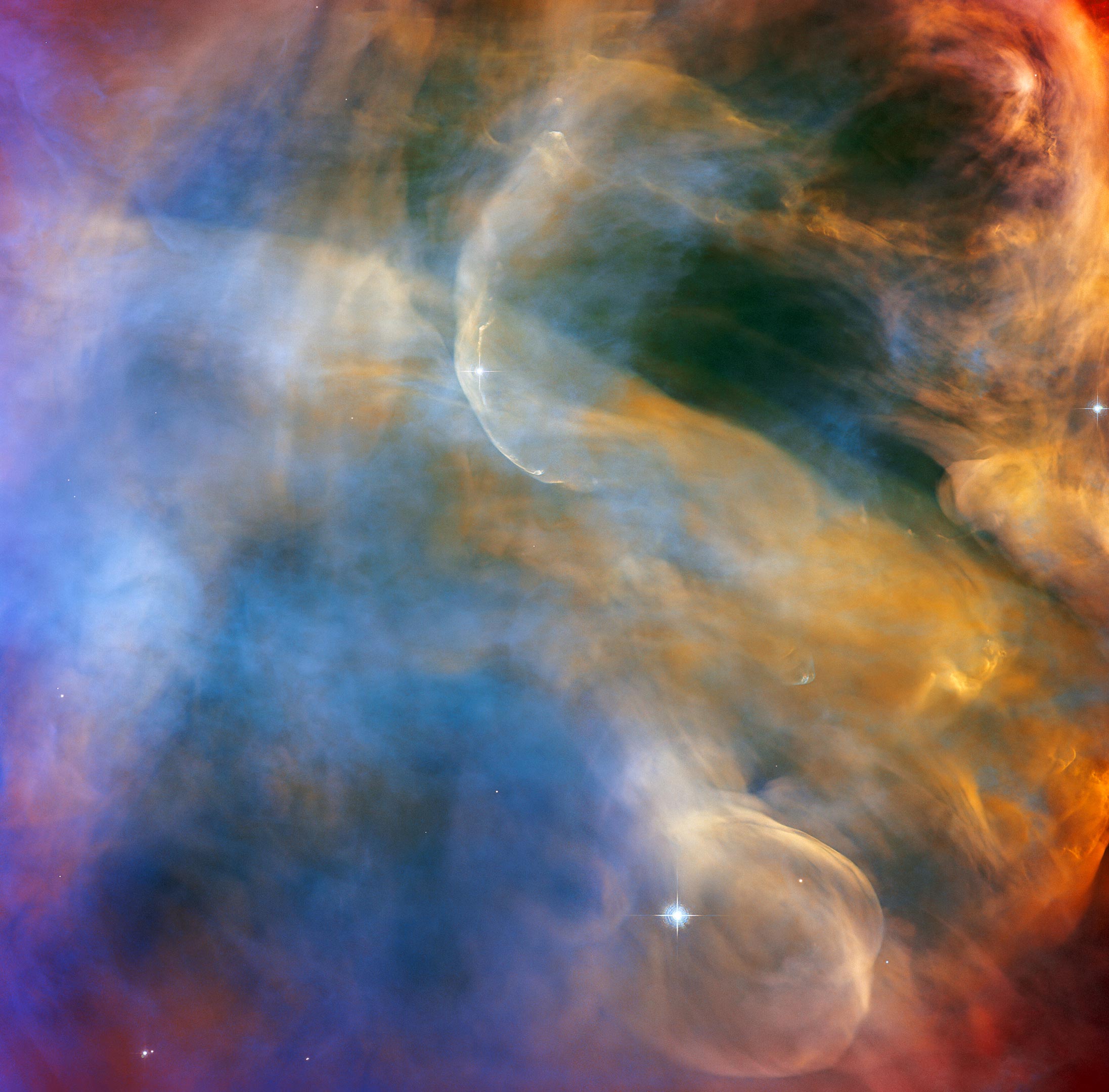
Herbig Haro Object HH-505
Hubble Space Telescope captures the colorful region surrounding the Herbig-Haro object HH 505. Credit: ESA/Hubble & NASA, J. Bally, Acknowledgment: M. H. Özsaraç

Captured with Hubble’s Advanced Camera for Surveys (ACS), this observation was made by astronomers studying the properties of outflows and protoplanetary discs. The Orion Nebula is teeming with intense ultraviolet radiation from bright young stars. The shockwaves formed by the outflows are brightly visible to Hubble, but the slower-moving currents of stellar material are also highlighted by this radiation. That allows astronomers to directly observe jets and outflows and learn more about their structures.
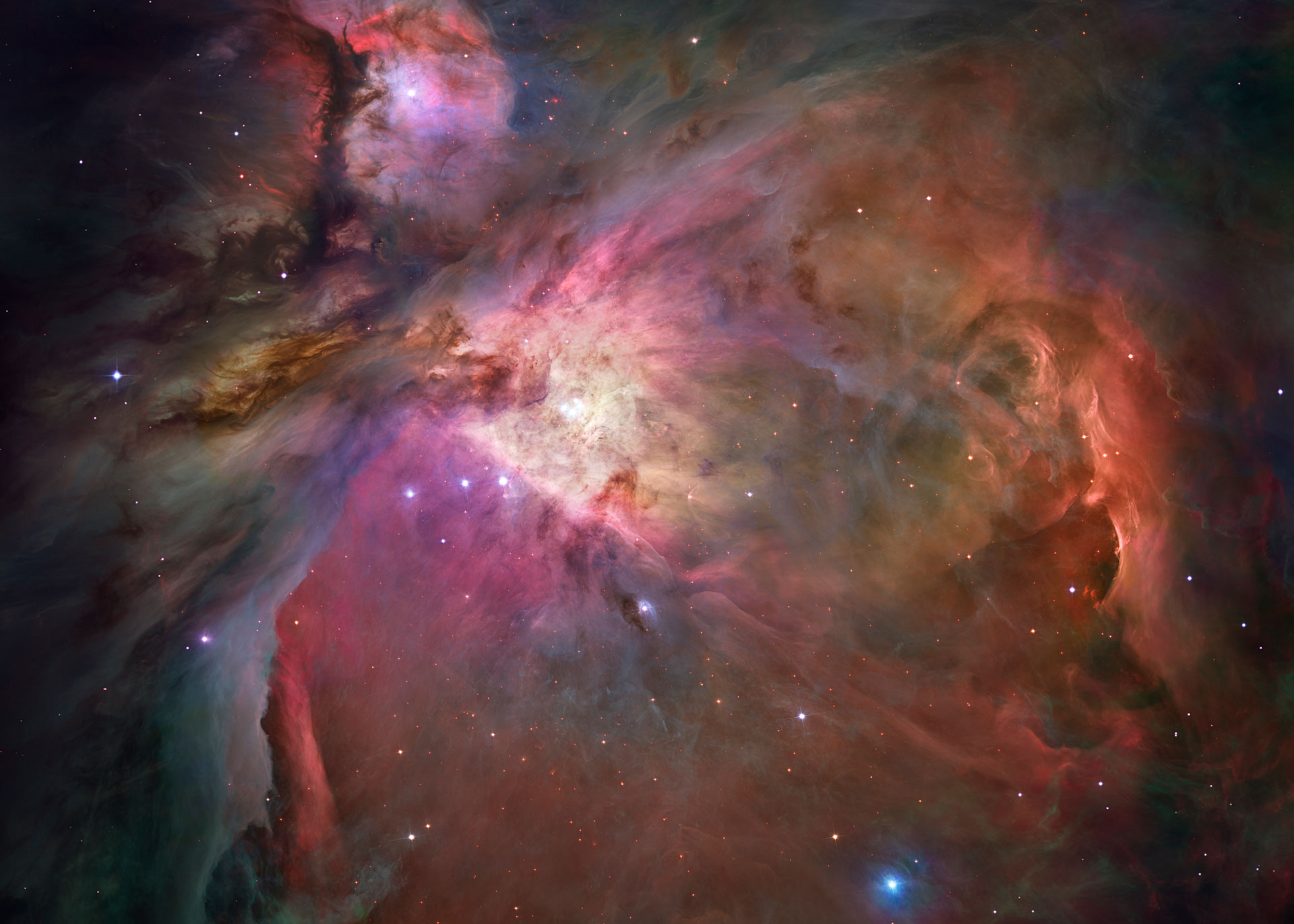
Hubbles Sharpest View of the Orion Nebula
The Orion Nebula is a cavern of tumultuous gas and dust where thousands of stars are forming. The energy released by the young stars transforms their place of birth, whipping their surroundings into fantastic forms. Credit: NASA, ESA, M. Robberto (STScI/ESA) and the Hubble Space Telescope Orion Treasury Project Team

The Orion Nebula is a dynamic region of dust and gas where thousands of stars are forming and is the closest region of massive star formation to Earth. As a result, it is one of the most scrutinized areas of the night sky and has frequently been a target for the Hubble Space Telescope. This observation was also part of a spellbinding Hubble mosaic (see above) of the Orion Nebula, which combined 520 ACS images in five different colors to create the sharpest view ever taken of the region.

Source: scitechdaily.com
Tags: HubbleNebula
Share5Tweet3Share1

Related Posts

Scientists find rare double-star system where one star orbited inside the other
Astronomy

Scientists find rare double-star system where one star orbited inside the other

11 months ago
How NASA’s Roman Space Telescope will illuminate cosmic dawn
Astronomy

How NASA’s Roman Space Telescope will illuminate cosmic dawn

2 years ago
Astronomers Reveal Stunning Image of Baby Star Coming Into Existence
Astronomy

Astronomers Reveal Stunning Image of Baby Star Coming Into Existence

2 years ago

Discussion about this post

© 2021 Viadiplomacy.org

No Result
View All Result
  • Hollywood
  • Elon Musk
  • Astronomy
  • Science
  • Technology

© 2021 Viadiplomacy.org

Welcome Back!

Login to your account below

Forgotten Password?

Retrieve your password

Please enter your username or email address to reset your password.

Log In