

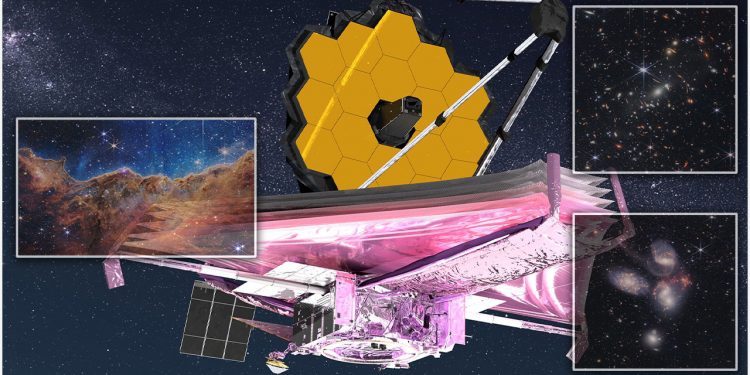
Before you are the first photos of the most powerful observatory in the world, which we have all been waiting for so long. Distant exoplanets, impressive nebulae and galaxies can already be seen with the human-made “all-seeing eye”.
Carina Nebula
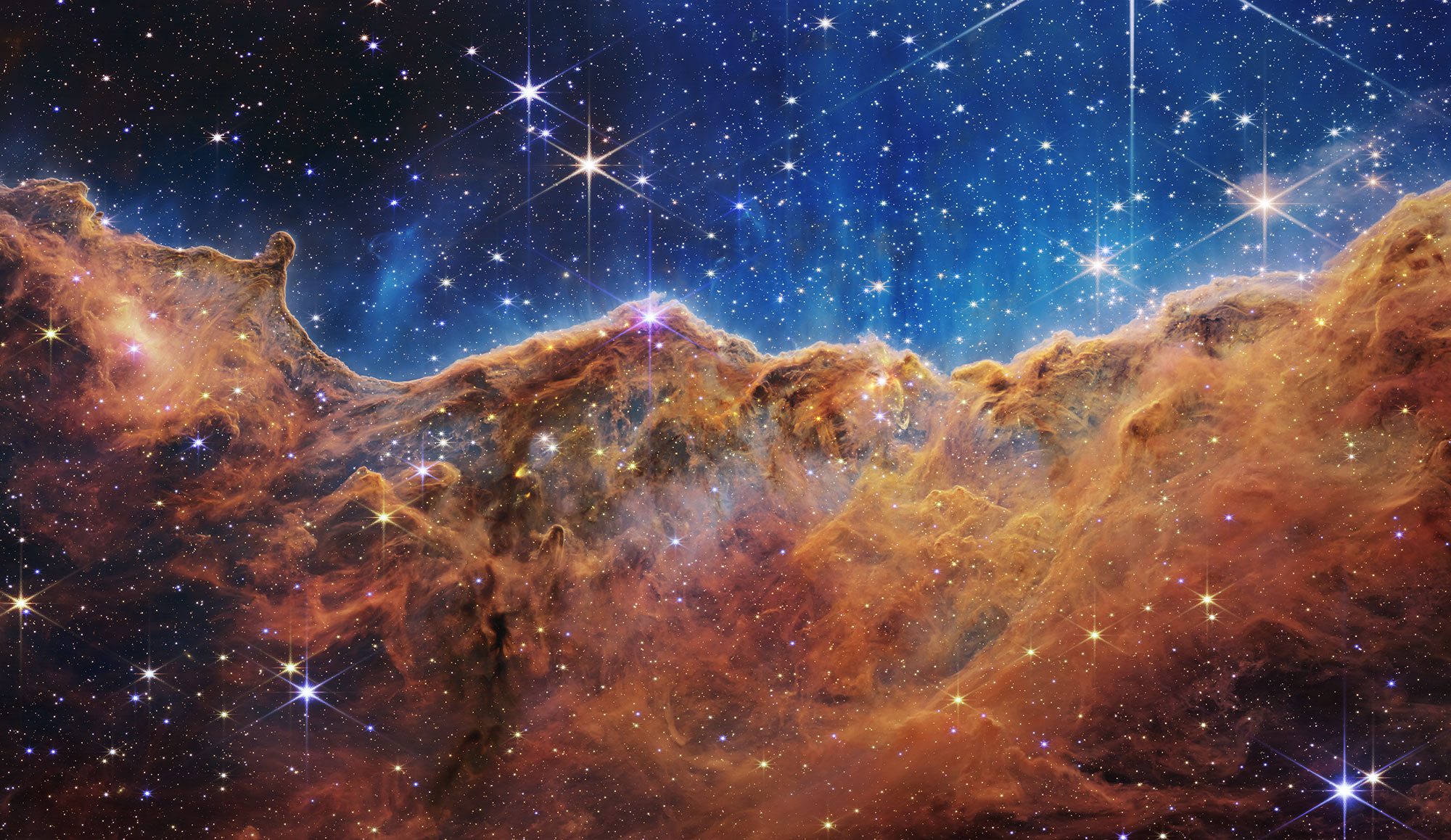
Located in the constellation of the same name, this spectacular object, also known as NGC 3372, is one of the brightest nebulae in our sky. It is about 7,600 light-years from Earth and is a star-forming region in which many luminaries have formed, and is much larger than the Sun.
Follow Us on Facebook
In the image, behind the dust cloud, in the region called “space rocks”, we see newborn stars, which gives us a rare opportunity to study luminaries in the early stages of development.
Exoplanet WASP-96b
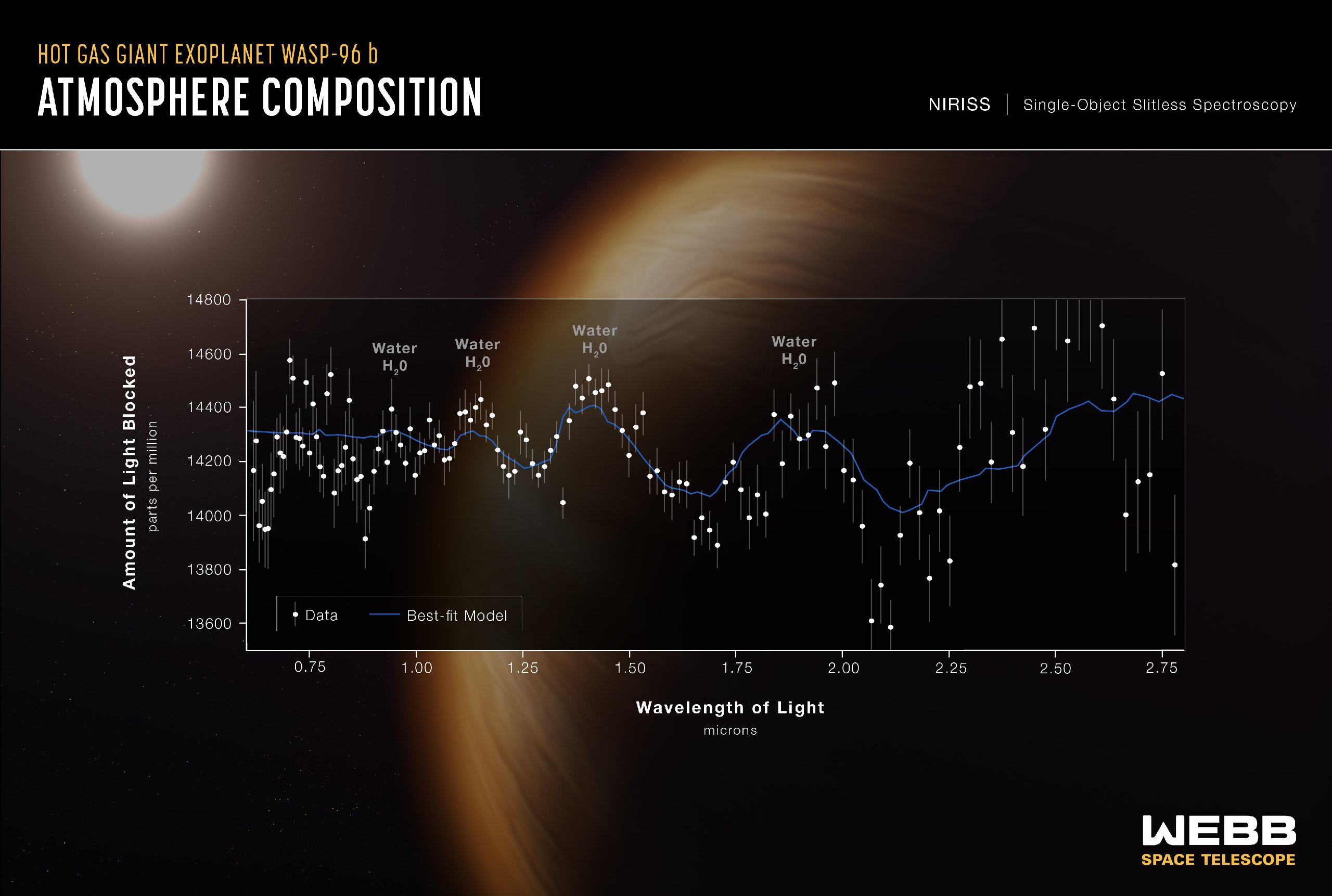
WASP-96b is a giant planet located outside our solar system. It is composed mainly of gas and travels at a distance of 1150 light years from Earth. The celestial body moves around a yellow dwarf star and takes 3.4 days to complete one orbit. The mass of this exoplanet is half that of Jupiter. Scientists announced its discovery in 2014.
Spectral data revealed traces of water vapor, fog and clouds in WASP-96b’s atmosphere, scientists said. Until now, it was believed that there were no ghosts there. This was determined by analyzing the spectrum of the parent star’s light interacting with its atmosphere.
The image presented as background is not a direct image of the exoplanet. In this case, the web has obtained spectral information.
Southern Ring Nebula
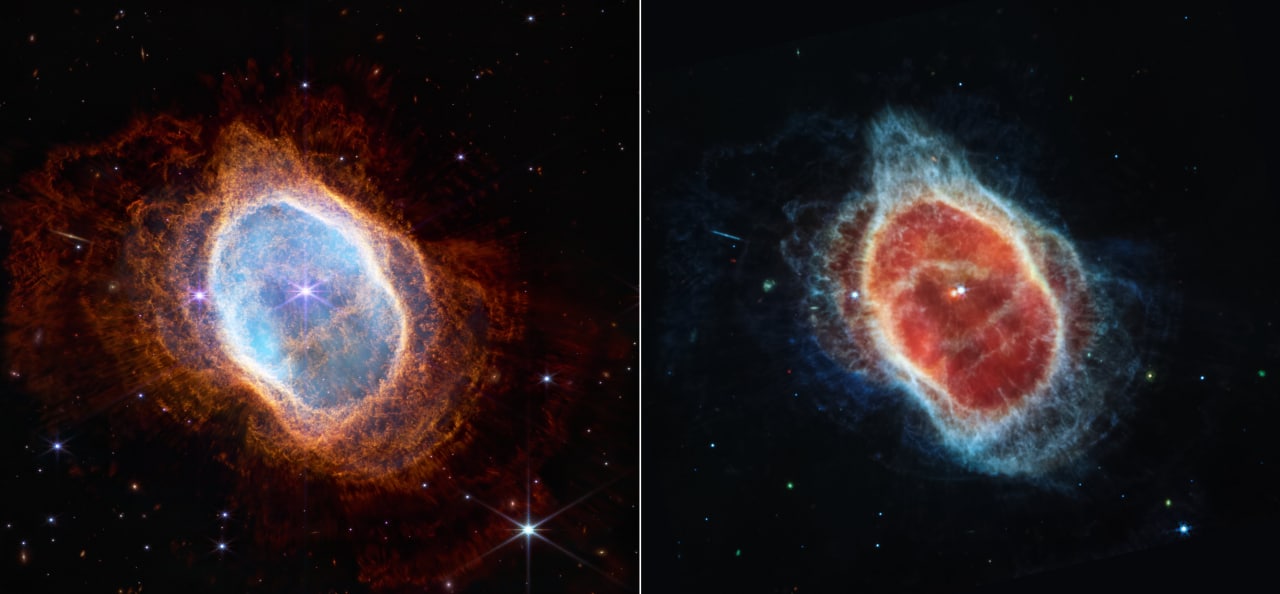
The Southern Ring Nebula, also known as NGC 3132, is located in the constellation of the Sails in the southern hemisphere of the sky and is 2,000 light-years away from our planet. This is a planetary nebula or an expanding cloud of gas that surrounds a dying star. Its diameter is about half a light-year.
In the photo we see 2 stars of the nebula, one is on the verge of death and less bright, and the other is relatively young and much brighter. On the left is an image taken by Webb’s NIRCam in the near-infrared spectrum, and on the right is a photo of the MIRI instrument in the mid-infrared spectrum. If in one we are blinded by lights, in the other the focus is on gas clouds that will disperse into space in thousands of years.
Stephan’s Quintet
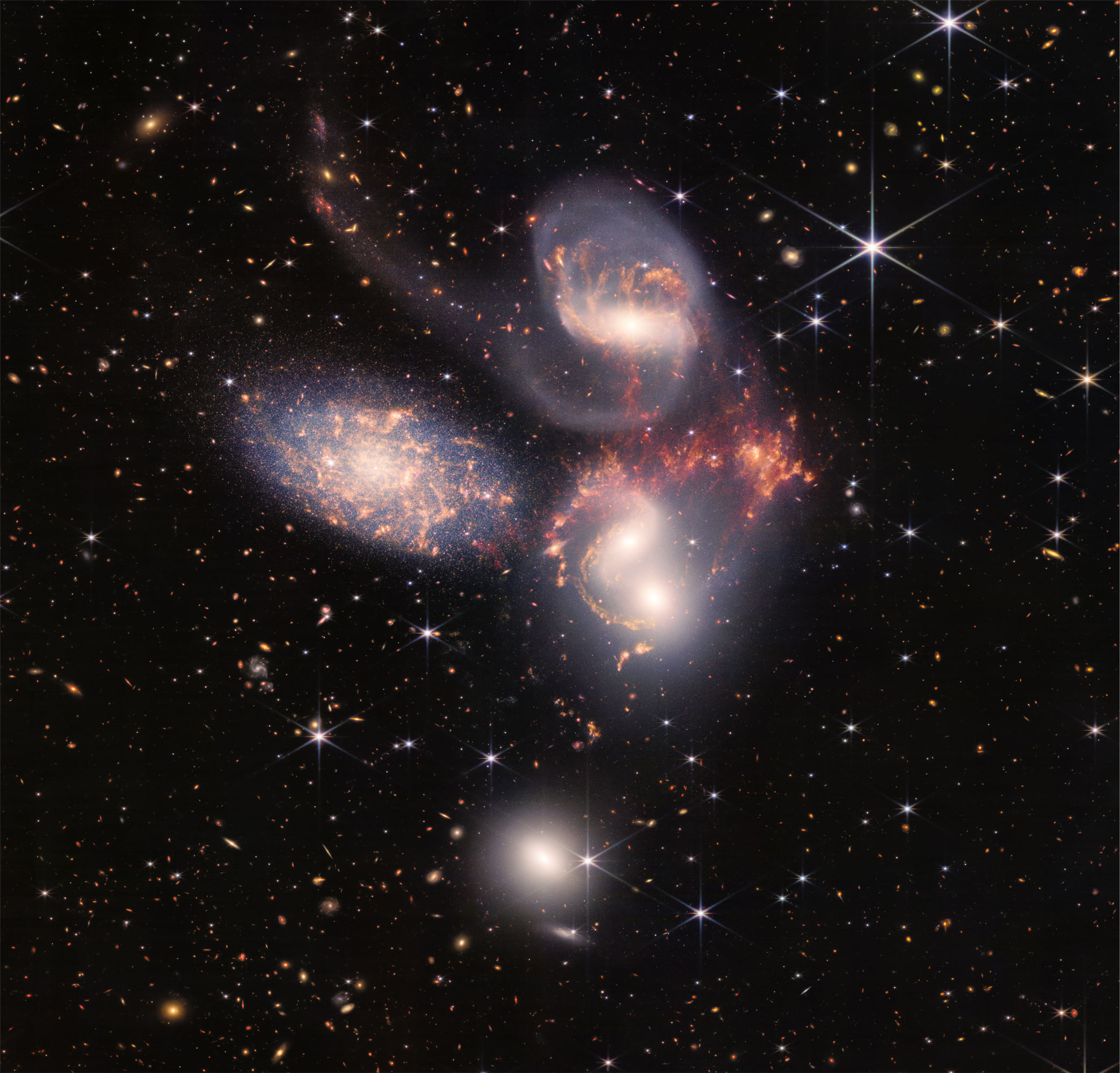
Stefan’s Quintet is located 290 million light-years away from Earth in the constellation Pegasus near the celestial equator and, as the name suggests, consists of 5 galaxies. It was discovered by the French astronomer Edouard Stephan in 1877. This quintet is the first known compact group of galaxies. 4 out of 5 huge matter systems interact with each other gravitationally, and in the future they are expected to merge.
This mosaic image is the largest image on the web, combining more than 150 million pixels and consisting of 1000 photos.
Let us remind you that before these amazing images were made public, the President of the USA, Joe Biden, presented to the public the very first photo, on which the set of huge groups of galaxies, called SMACS 0723, is captured in unprecedented detail. Interestingly, this image shows an area of the sky that is only the size of a grain of sand, which once again demonstrates the greatness of the James Webb telescope. It contains ancient galaxies, including one that is 13.1 billion years old, when the universe was very, very young. We also see light bent by gravitational lensing, which makes faint objects appear.
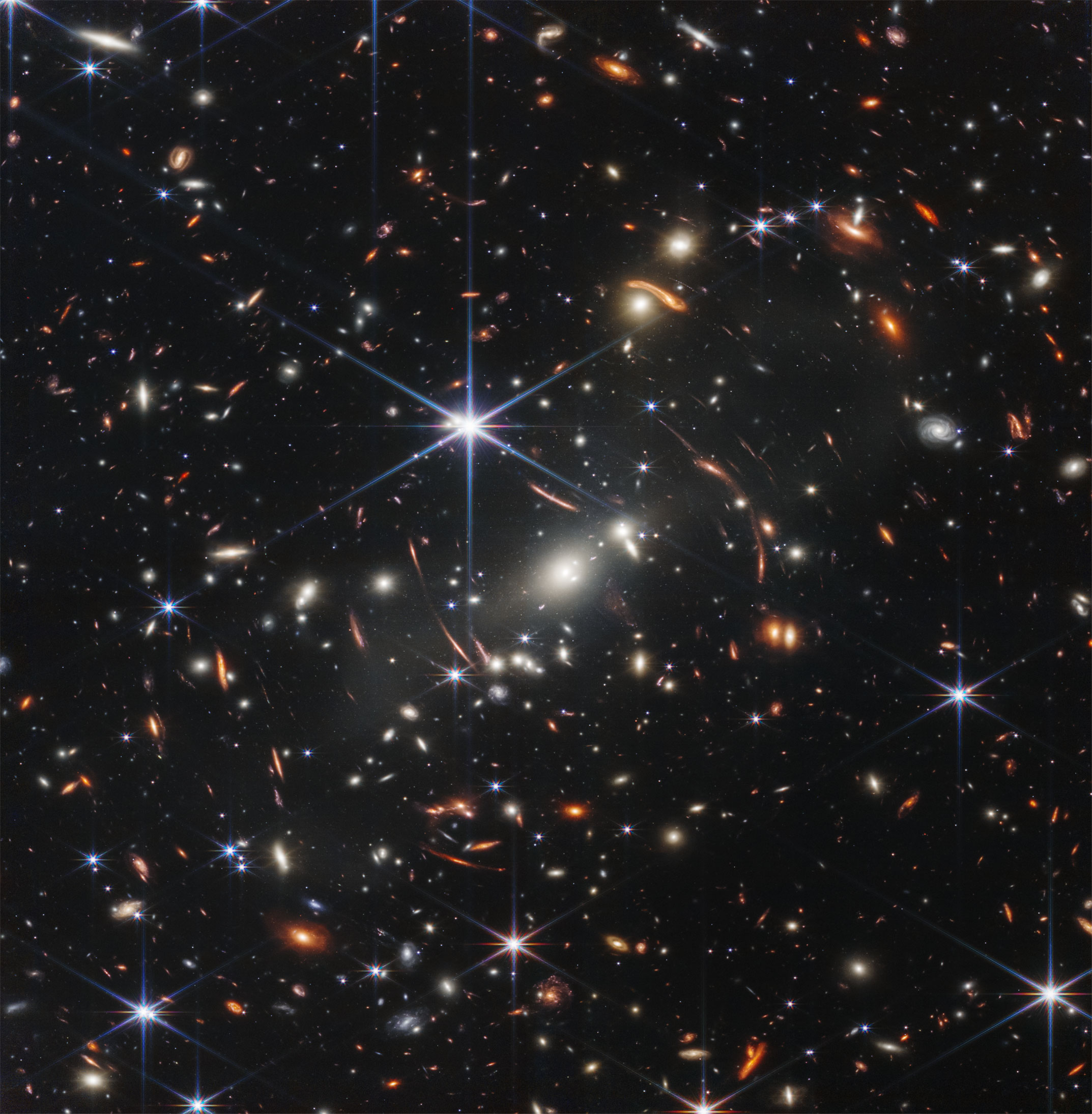
We have waited too long for the James Webb Telescope to launch. Finally, it was sent to explore the world on December 25. The device moves at a distance of 1.5 million kilometers from the Earth, which allows it to observe a wider area of space.
Through this powerful observatory, humanity will look into the past of space and better study distant stars, galaxies, nebulae, black holes, or planets, as well as the solar system itself.

Discussion about this post