

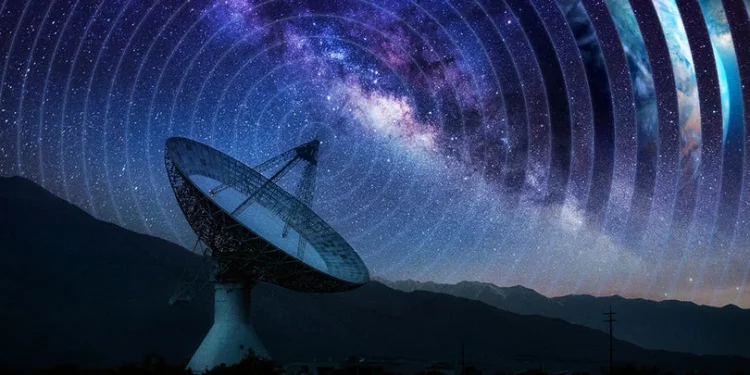
Scientists searching for technological traces of an intelligent extraterrestrial civilization as part of the project Breakthrough Listen have found a new method of data processing. The latter will help us to better analyze the information collected by radio telescopes.
The fact is that with the new approach, specialists will analyze a wider and deeper area of space, which will increase the chance of detecting signals coming from distant planets (according to the researchers, “powerful transmitters”).
“We realized that observations using radio telescopes allow us to study not only the target central star, but also a moon-sized region of the sky,” says Michael Gerrett, a scientist working at the University of Manchester.
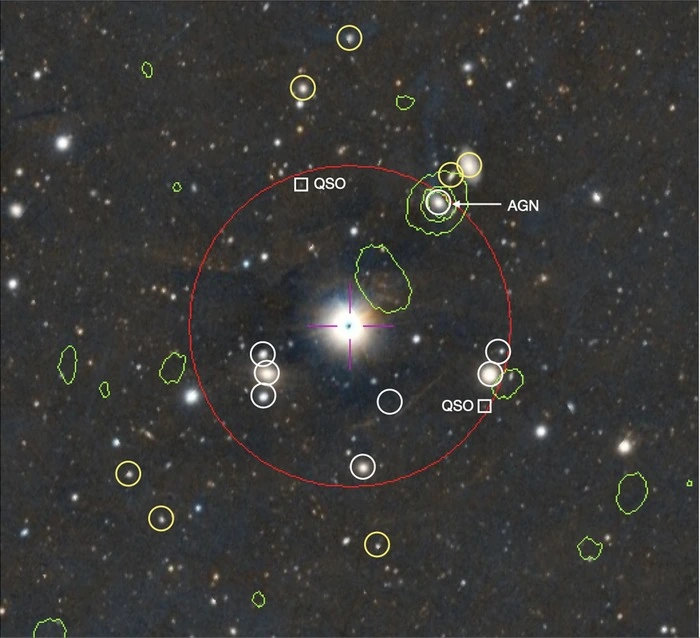
“Other objects in this area include foreground and background stars in our Milky Way Galaxy. Until now, we didn’t know how to take advantage of this because the distances to such luminaries were unknown,” he says.
Using the European Space Agency’s Gaia telescope, Garrett and his colleague, Breakthrough Listen principal investigator Andrew Semyon, were able to obtain more precise data. After that, they identified more than 140,000 objects in the project’s database that were missed in earlier observations. For example, the core of galaxies, radio galaxies, and galaxies with the “ability” of gravitational lensing.
The authors’ work is available on the scientific portal arXiv and will soon be published in Monthly Notices of the Royal Astronomical Society.



Discussion about this post